

 By
By What if living a longer, healthier life wasn’t about expensive supplements, cutting-edge biohacks, or winning the genetic lottery — but about a handful of simple, almost boring daily habits? It sounds too good to be true. Yet when researchers studied the places on Earth where people routinely live past 100, that’s almost exactly what they found.
The truth about how to live longer is far more reachable than most people think. Scientists estimate that only about 20 to 25 percent of your lifespan is dictated by your genes. The rest — the lion’s share — comes down to how you live each ordinary day. That’s incredible news, because it means the power is largely in your hands.
Let’s explore the daily habits shared by the world’s longest-living people, and how you can borrow them no matter where you live or how old you are right now.
The Secret of the “Blue Zones”
Around the world, researchers identified a handful of regions where people live remarkably long, healthy lives — places like Okinawa in Japan, Sardinia in Italy, Ikaria in Greece, the Nicoya Peninsula in Costa Rica, and a community in Loma Linda, California. These became known as “Blue Zones.”
Here’s what’s fascinating: these communities are scattered across wildly different cultures, cuisines, and climates. Yet they share a strikingly similar set of everyday habits. They didn’t follow strict diets or grueling fitness regimens. Their longevity was woven naturally into the fabric of daily life. That’s the real lesson — long life isn’t something you force through willpower. It’s something you build through your environment and routines. Let’s unpack what they do.
1. They Move Naturally, All Day Long
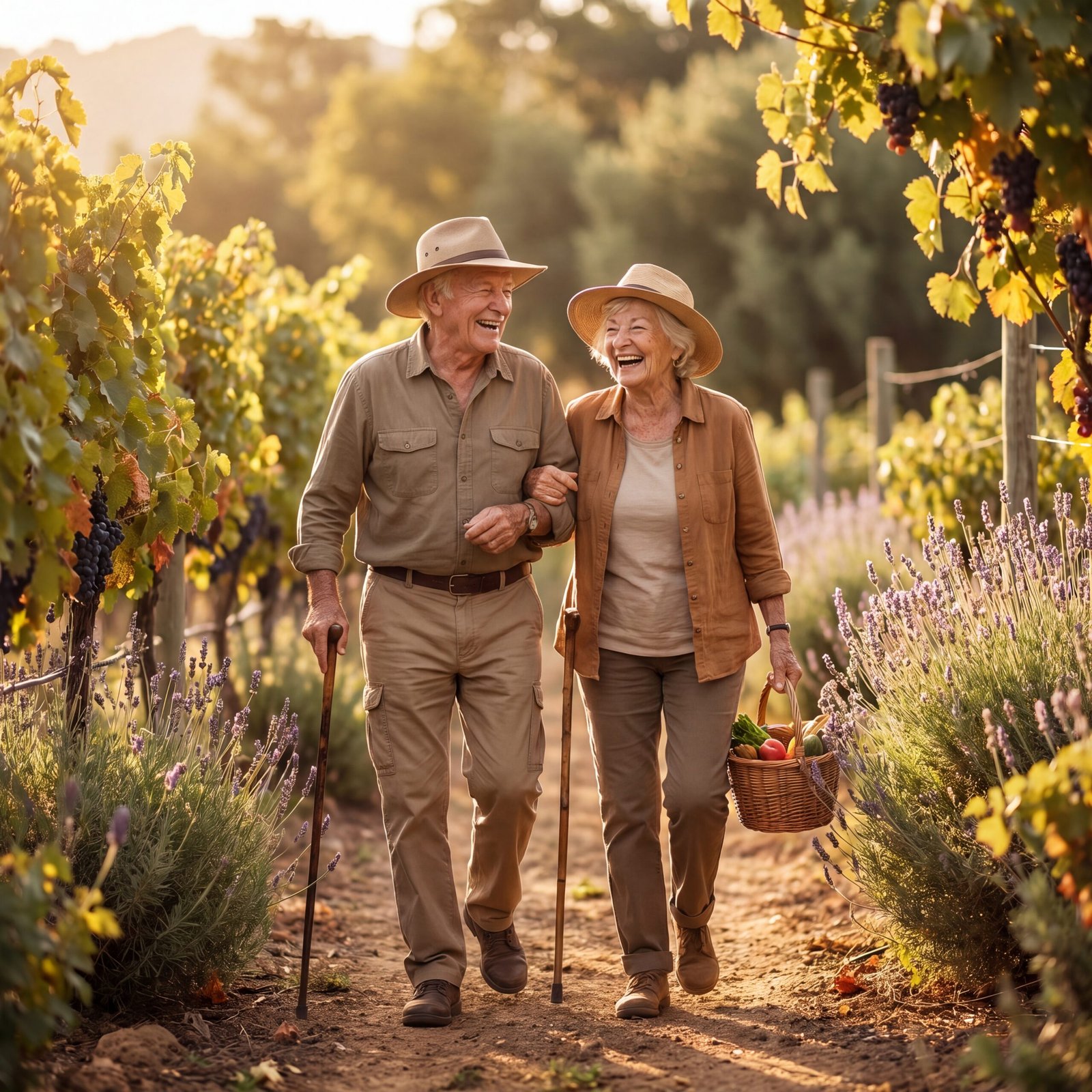
The world’s longest-living people don’t run marathons or punish themselves at the gym. Instead, their lives are full of constant, gentle, natural movement. They walk to their neighbors’ homes, tend gardens, knead bread by hand, and climb hills as part of ordinary life.
The takeaway isn’t that exercise doesn’t matter — it’s that constant low-level movement may matter even more than occasional intense workouts. You don’t need to become an athlete. You need to sit less and move more, all day. Take the stairs, walk to the shop, garden, stretch, pace while on calls. Build movement into your life so it happens without you having to “find time” for it.
2. They Eat Until They’re 80% Full
In Okinawa, there’s a beautiful phrase, hara hachi bu, a gentle reminder spoken before meals to stop eating when you’re about 80 percent full. This simple practice creates a small calorie gap that, over a lifetime, has powerful effects on weight and health.
It takes your stomach about 20 minutes to signal your brain that it’s satisfied. By slowing down and stopping just before you feel completely full, you avoid the overeating that quietly burdens the body over decades. Try it: eat slowly, put your fork down between bites, and check in with your hunger before automatically going for seconds.
3. They Eat Mostly Plants
Across every Blue Zone, the diet is overwhelmingly plant-based. Beans, lentils, vegetables, whole grains, nuts, and greens form the foundation of nearly every meal. Meat is eaten, but often sparingly — sometimes just a few times a month, in small portions, as a celebration rather than a daily staple.
Beans in particular show up again and again as a longevity superstar — cheap, filling, rich in fiber and protein, and gentle on the body. You don’t have to go fully vegetarian. Simply shifting the balance of your plate toward more plants and fewer processed and heavily meat-based meals echoes what the world’s oldest people do instinctively.
4. They Have a Strong Sense of Purpose
This one surprises people, but it may be among the most powerful. In Okinawa it’s called ikigai; in Nicoya, plan de vida — both roughly mean “the reason you wake up in the morning.” Having a clear sense of purpose is strongly linked to longer life.
Purpose gives structure, motivation, and meaning. It can be anything — caring for grandchildren, tending a garden, mastering a craft, volunteering, or contributing to your community. The point is to feel that you matter and that your days have direction. If you’ve drifted from your sense of purpose, gently reconnecting with what gives your life meaning may be one of the most life-extending things you ever do.
5. They Manage Stress with Daily Rituals
Long-lived people experience stress like everyone else — but they have built-in ways to release it. The Ikarians nap. The Sardinians enjoy happy hour with friends. Okinawans pause to remember their ancestors. These small, regular rituals act as pressure valves, preventing the slow, corrosive build-up of chronic stress.
Chronic stress fuels inflammation and accelerates aging throughout the body. The lesson is to build your own daily “downshift” routine — whether that’s a few minutes of quiet, a walk, prayer, deep breathing, or simply unhurried time with people you love. Consistency matters more than the specific method.
6. They Belong to a Community
Loneliness is now considered as damaging to health as smoking, while strong social connection is one of the most consistent predictors of a long life. In the Blue Zones, people are deeply embedded in tight-knit communities. They see friends daily, share meals, and grow old surrounded by others rather than in isolation.
This isn’t a “nice to have” — it’s a core longevity ingredient. Nurture your relationships actively. Make time for friends and family, join groups, check in on people, and resist the modern drift toward isolation. Your social life is, quite literally, a health practice.
7. They Put Family First
Across these long-living cultures, family is the center of life. Aging parents and grandparents aren’t pushed to the margins — they’re kept close, valued, and engaged. Multiple generations often live near or with one another, sharing care, meals, and meaning.
This closeness benefits everyone: elders stay mentally and socially active and feel needed, while younger generations gain wisdom and support. Investing in your family bonds, staying connected across generations, and keeping elders involved rather than isolated is a habit that quietly nourishes long, healthy life.
8. They Belong to Something Bigger Than Themselves
Most centenarians in the Blue Zones belong to some kind of community of shared belief or values — often a faith community, but the broader principle is regular participation in something larger than the individual self. Studies have linked attending regular gatherings of this kind with longer life expectancy.
Whether or not faith is part of your life, the underlying lesson is about belonging, ritual, and shared meaning. Being part of a group that meets regularly, shares values, and supports one another provides structure, connection, and a sense of being held by something bigger. Find your version of that, whatever it looks like for you.
9. They Prioritize Real Rest and Sleep
The world’s longest-living people don’t glorify being busy and sleep-deprived. They rest. Many take afternoon naps, go to bed and rise with natural light, and treat rest as essential rather than lazy. Quality sleep is when your body repairs, consolidates memory, regulates hormones, and clears waste from the brain.
In our culture, sleep is often the first thing we sacrifice — and it shows. Protecting 7 to 9 hours of good sleep, keeping a consistent rhythm, and allowing yourself genuine rest isn’t indulgence. It’s one of the most powerful, free anti-aging tools available to you.
10. They Drink in Moderation (and Mostly Water)
In several Blue Zones, moderate drinking — often a glass of wine shared with friends over a meal — is part of the culture. But the key words are moderate and social. It’s never about excess. And alongside that, they drink plenty of water and natural beverages like herbal teas rather than sugary drinks.
The bigger lesson here is balance and hydration. Staying well-hydrated supports nearly every function in your body, while heavy drinking does the opposite of promoting longevity. If you drink, keep it light and social; either way, make water your default.
It’s Never Too Late to Start
Perhaps the most encouraging part of all this research is that these habits help at any age. You don’t have to have lived perfectly up to now. Bodies are remarkably responsive, and adopting healthier patterns — even later in life — can improve how you feel and add quality years.
Notice, too, that almost none of these habits cost money. They aren’t about pills or gadgets. They’re about how you eat, move, connect, rest, and find meaning. The world’s longest-living people aren’t living longer because of some secret unavailable to the rest of us. They’re living longer because of the way they live every ordinary day.
Your Longevity Starts Today
You don’t need to overhaul your entire life this afternoon. The magic of these habits is that they compound quietly over time, and small consistent changes win the long game.
So pick just one to begin with. Maybe you take a walk after dinner tonight. Maybe you call a friend you’ve been meaning to reach. Maybe you add beans to tomorrow’s meal, stop eating at 80 percent full, or finally protect your bedtime. Then, next week, add another.
A longer, healthier, more meaningful life isn’t built in a single dramatic leap. It’s built in the small, repeated choices of regular days — the walks, the meals, the connections, the moments of rest and purpose. The world’s oldest people figured that out. Now you have their playbook. The best time to start living it is today.
This article is for general educational purposes and isn’t a substitute for personalized medical advice. Before making significant changes to your diet, exercise, or lifestyle — especially if you have a health condition — please consult a qualified healthcare professional.