


 By
By There’s a stubborn myth that eating healthy means spending a fortune — that nutritious food is a luxury reserved for people with big grocery budgets, fancy organic stores, and time to spare. It’s one of the biggest reasons people give up on eating well before they even start. But here’s the truth: some of the healthiest foods on the planet are also among the cheapest, and eating nutritiously on a tight budget is absolutely achievable with the right strategies.
In fact, much of what makes food expensive isn’t the healthy part at all — it’s the processed snacks, sugary drinks, takeout, and convenience foods that quietly drain both your wallet and your health. Learning how to eat healthy on a budget is a genuinely empowering skill that saves you money and improves your wellbeing at the same time.
Let’s break down practical, real-world ways to eat well without overspending.
Healthy Doesn’t Have to Mean Expensive
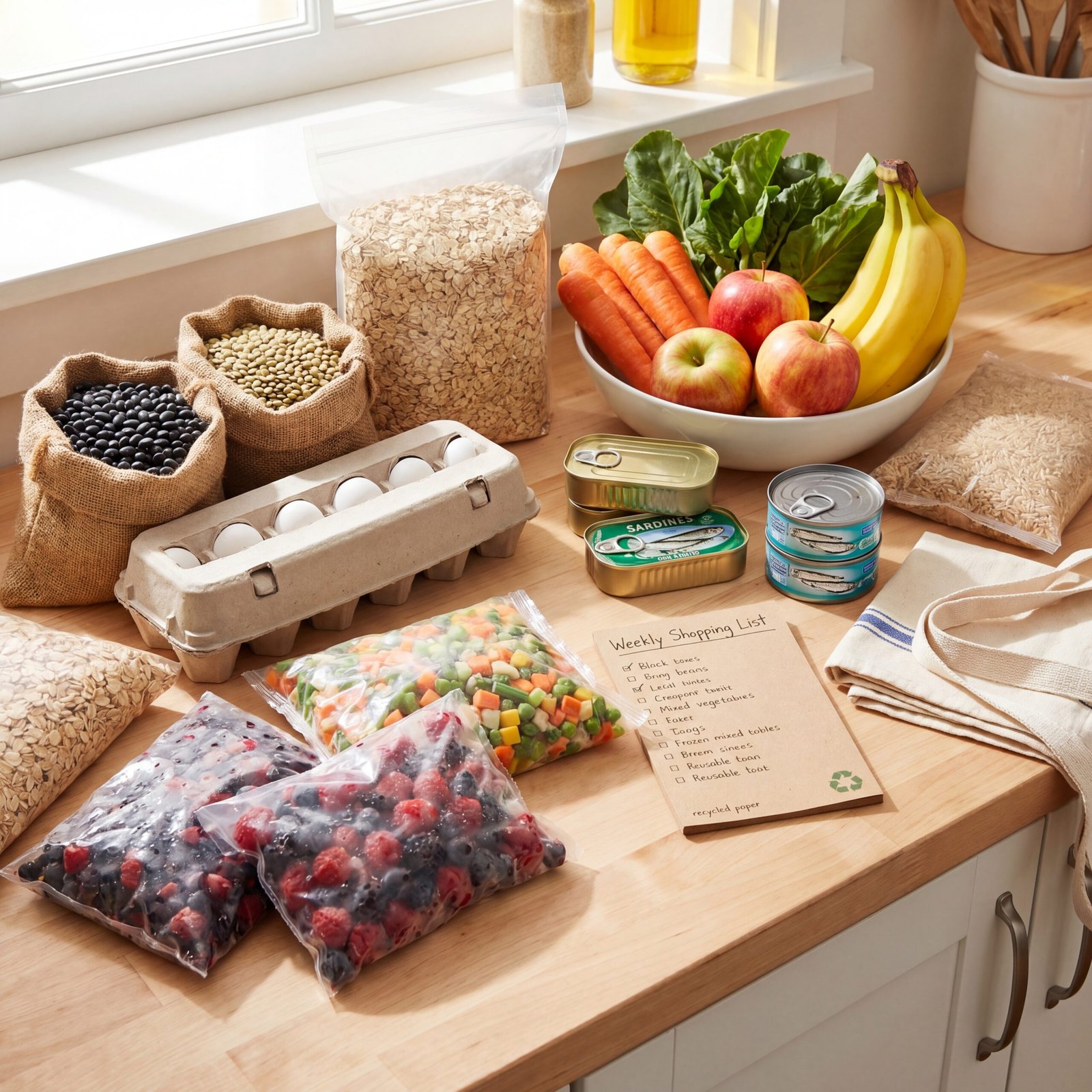
First, let’s bust the myth properly. The image of healthy eating as exotic superfoods, pricey supplements, and gourmet organic everything is largely marketing, not reality. The foundation of a genuinely healthy diet is built on humble, affordable staples — beans, lentils, oats, rice, eggs, frozen vegetables, in-season produce, and basic proteins.
Meanwhile, a huge portion of the average grocery bill goes to expensive items that actively harm health: sodas, chips, candy, processed snacks, ready meals, and takeout. These cost far more per nutrient than whole foods and provide far less nourishment. So in many cases, shifting toward healthier eating actually saves money rather than costing more. The key is knowing which strategies and foods give you the most nutrition for your money. Once you do, eating well on a budget becomes not just possible but surprisingly easy.
1. Plan Your Meals Before You Shop
The single most powerful budget and health habit is meal planning. Going to the store without a plan leads to impulse buys, forgotten ingredients, wasted food, and last-minute takeout — all of which cost money and undermine healthy eating. A little planning eliminates most of that waste and overspending.
Before shopping, take a few minutes to plan your meals for the week, then build a specific shopping list around those meals and what you already have at home. Stick to that list at the store to avoid impulse purchases. Planning lets you buy exactly what you need, use ingredients across multiple meals so nothing goes to waste, and avoid the expensive convenience traps that catch unplanned shoppers. This simple habit alone can dramatically cut your grocery spending while improving the quality of what you eat.
2. Cook at Home
Cooking your own meals is one of the biggest money-savers and health-boosters there is. Restaurant meals, takeout, and convenience foods carry a steep markup and are typically higher in salt, sugar, unhealthy fats, and calories than what you’d make at home. Every meal you cook yourself saves money and gives you full control over what goes into your body.
You don’t need to be a gourmet chef — simple, basic home cooking is enough. Learn a handful of easy, affordable recipes built around cheap staples, and lean on batch cooking to make several meals at once. Cooking at home also lets you control portions and use up ingredients efficiently. While it takes a little more time than ordering out, the savings to both your wallet and your health are substantial. Home cooking is the heart of eating well on a budget.
3. Embrace Beans, Lentils, and Other Legumes
If there’s a single budget superfood, it’s legumes — beans, lentils, chickpeas, and peas. They’re extraordinarily cheap, especially in dried form, yet packed with protein, fiber, and nutrients. They’re filling, versatile, store for ages, and can stretch or even replace more expensive meat in countless dishes.
Use beans and lentils as the base of soups, stews, chilis, curries, salads, and grain bowls, or to bulk out meat dishes so you use less meat. A bag of dried lentils or beans costs very little and provides numerous nutritious, satisfying meals. They’re a cornerstone of healthy, affordable eating around the world for good reason. Building more of your meals around these humble powerhouses is one of the most effective ways to eat well while spending less. Your budget and your body both benefit.
4. Buy Frozen Fruits and Vegetables
Don’t overlook the freezer aisle — frozen fruits and vegetables are one of the best-kept secrets of budget healthy eating. They’re often cheaper than fresh, last far longer (so nothing spoils and goes to waste), and are just as nutritious. In fact, frozen produce is typically frozen at peak ripeness, locking in its nutrients.
Frozen vegetables are perfect for soups, stir-fries, and side dishes, while frozen berries and fruit are great for smoothies, oatmeal, and baking. Because they don’t spoil quickly, you can buy them in larger quantities, use exactly what you need, and avoid the waste that makes fresh produce feel expensive. Keeping your freezer stocked with a variety of frozen fruits and vegetables ensures you always have affordable, nutritious options on hand. It’s one of the simplest swaps for eating healthy on a budget.
5. Buy in Bulk (Wisely)
Buying certain staples in bulk can save significant money over time, as the per-unit cost is usually much lower. This works especially well for non-perishable basics you use regularly — rice, oats, dried beans and lentils, pasta, flour, nuts, and similar pantry staples that store well for a long time.
The key word is wisely. Only buy in bulk what you’ll actually use and can store properly, since buying large quantities of perishable food you won’t finish just creates waste, defeating the purpose. Focus bulk buying on shelf-stable items, and store them well to keep them fresh. Building up a pantry of affordable bulk staples gives you the foundation for countless cheap, healthy meals and reduces how often you need to shop. Smart bulk buying is a powerful long-term money-saver.
6. Choose Cheaper Proteins
Protein is often the most expensive part of a meal, but you don’t need pricey cuts of meat to eat well. There are many affordable, nutritious protein sources to lean on. Eggs are one of the cheapest, most versatile, nutrient-dense proteins available. Beans and lentils, as mentioned, are budget protein champions.
Other affordable options include canned fish like tuna and sardines (which also provide healthy omega-3s), cheaper cuts of meat used in slow-cooked dishes, whole chickens (cheaper than pre-cut pieces), and dairy like plain yogurt and cottage cheese. You can also simply use less meat by bulking dishes out with vegetables, beans, and grains. By choosing economical proteins and using them strategically, you can meet your protein needs comfortably without straining your budget. Variety here keeps both your meals and your finances healthy.
7. Cook Once, Eat Multiple Times (Batch Cooking)
Batch cooking is a game-changer for both budget and health. By cooking larger quantities at once — a big pot of soup, stew, chili, curry, or a tray of roasted vegetables and grains — you save money, time, and energy, and you always have healthy meals ready to go. This dramatically reduces the temptation to order expensive takeout when you’re tired and hungry.
Cook extra portions and store them in the fridge or freezer for later in the week, giving you ready-made healthy meals with minimal extra effort. Buying ingredients for batch meals also lets you use cheaper bulk quantities efficiently. Having nutritious food prepared in advance is one of the best defenses against the budget-busting, less-healthy convenience choices we all make when short on time and energy. A little cooking effort up front pays off all week.
8. Reduce Food Waste
Throwing away food is throwing away money, and most households waste a surprising amount. Reducing food waste is essentially free money and a key part of eating well on a budget. The strategies are simple but effective: plan your meals, store food properly to extend its life, and actually use what you buy.
Get creative with leftovers and ingredients nearing their end — make soups, stir-fries, frittatas, or “use it up” meals from what’s lingering in your fridge. Understand date labels (much food is still good past its “best before” date). Store produce correctly and freeze things before they spoil. By treating the food you’ve already paid for as valuable and minimizing what ends up in the bin, you stretch your grocery budget significantly further. Wasting less is one of the easiest ways to spend less.
9. Shop Smart: Sales, Seasons, and Store Brands
A few savvy shopping habits add up to real savings. Buy fruits and vegetables that are in season, as they’re cheaper, fresher, and tastier when abundant. Watch for sales and stock up on staples and freezer-friendly items when they’re discounted. Choose store-brand or generic products, which are usually significantly cheaper than name brands while being virtually identical in quality.
It also pays to compare prices, check the unit price (price per weight) rather than just the sticker price, and avoid shopping while hungry, which leads to impulse buys. Some shoppers save by visiting budget grocery stores or local markets. None of these require much effort, but together they meaningfully reduce your bill. Shopping strategically rather than on autopilot is a simple way to eat the same healthy food for less money.
10. Cut Back on Processed Foods and Sugary Drinks
Here’s where budget and health align beautifully. Processed snacks, sugary drinks, candy, and convenience foods are expensive per nutrient, provide little nourishment, and harm your health — making them a poor choice for both your wallet and your wellbeing. Cutting back on them is often where the biggest savings hide.
Replace sugary sodas and juices with water (the cheapest, healthiest drink there is). Swap expensive packaged snacks for cheaper, healthier options like fruit, homemade popcorn, or nuts. Reducing these items frees up budget for genuinely nutritious whole foods. Many people are surprised to discover how much of their grocery spending was going to these low-value items. By trimming the processed and sugary purchases, you eat better and spend less at the same time — a true win-win.
11. Grow a Little of Your Own
If you have any space at all — even a sunny windowsill or a small balcony — growing some of your own food can be rewarding and economical. Herbs are especially cost-effective to grow at home, since fresh herbs are pricey to buy yet easy and cheap to cultivate. A few pots of herbs can flavor countless meals for almost nothing.
Beyond herbs, easy-to-grow vegetables like salad greens, tomatoes, or peppers can supplement your groceries if you have the space and interest. You don’t need a big garden; even small-scale growing reduces what you need to buy and gives you fresh, free produce. It’s also a satisfying, healthy hobby. While it won’t replace your shopping entirely, growing a little of your own food is a nice supplement to budget-friendly healthy eating, and surprisingly accessible even in small spaces.
12. Drink Water Instead of Pricey Beverages
This simple swap deserves its own mention because it saves so much money and so dramatically improves health. Sugary sodas, juices, energy drinks, fancy coffees, and bottled beverages add up to a significant chunk of many people’s food spending, while contributing sugar and empty calories with little nutritional value.
Water, by contrast, is essentially free from the tap, the healthiest beverage there is, and exactly what your body needs for energy and proper functioning. Making water your default drink — perhaps with a slice of lemon or some mint if you find it boring — cuts both your spending and your sugar intake substantially. Brewing your own coffee or tea at home rather than buying it out saves even more. It’s one of the easiest, highest-impact changes for eating (and drinking) healthy on a budget.
Eating Well for Less Is Within Reach
The belief that healthy eating is unaffordable simply doesn’t hold up. As you can see, eating nutritiously on a budget is not only possible — it often costs less than the processed, convenience-based eating it replaces. The foundations of a healthy diet are humble, affordable staples, and the strategies for stretching your budget are practical and within everyone’s reach.
The core principles tie together neatly: plan ahead, cook at home, lean on cheap nutritious staples like beans and frozen produce, buy smart, reduce waste, and cut back on the expensive processed items that harm both wallet and health. None of it requires a big budget — just a little knowledge and intention.
You don’t have to adopt every tip at once. Pick one or two that feel most doable — maybe meal planning, building meals around beans and lentils, or swapping sugary drinks for water — and start there this week. As these habits take hold, you’ll likely find yourself eating better and spending less. Nutritious, satisfying food isn’t a luxury reserved for the wealthy — it’s something you can absolutely afford, starting with your very next trip to the store.
This article is for general educational purposes and isn’t a substitute for personalized nutritional advice. If you have specific dietary needs, health conditions, or food-budget concerns, consider consulting a qualified healthcare professional, registered dietitian, or local community food resources for tailored support.