

 By
By You bend down to tie your shoes and feel a pull in your lower back. You reach for something on a high shelf and your shoulder protests. You get up after sitting for an hour and feel stiff as a board. If your body feels tight, creaky, and uncooperative, you’re not alone — and the good news is that it doesn’t have to stay that way.
Flexibility is one of the most neglected pillars of fitness. People obsess over strength and cardio while completely ignoring how well their body actually moves. Yet flexibility and mobility are what keep you comfortable, pain-free, and capable in everyday life. Learning how to improve flexibility isn’t just for gymnasts or yogis — it’s for anyone who wants to move through their days feeling loose, easy, and free rather than stiff and restricted.
Let’s explore why flexibility matters so much, and exactly how to safely build a more supple, comfortable body, no matter how tight you feel right now.
Why Flexibility Matters More Than You Think
Flexibility is the ability of your muscles and joints to move through their full range of motion. It might sound like a “nice to have,” but it has a real, daily impact on your quality of life. When you’re flexible, everyday movements — bending, reaching, twisting, squatting — feel effortless. When you’re tight and stiff, those same movements become uncomfortable, restricted, and even risky.
Good flexibility helps prevent injuries by allowing your body to move properly rather than straining against tight, restricted tissues. It can ease common aches and pains, particularly the back, neck, and hip tightness that comes from our modern sitting-heavy lifestyles. It improves your posture, your athletic performance, and your balance, and it tends to reduce that general feeling of stiffness that can make you feel older than you are. Flexibility is quite literally what keeps you moving well — and moving well is the foundation of an active, comfortable, independent life.
Why We Get So Stiff (Especially Now)
If you feel tighter than you used to, there are clear reasons — and understanding them is reassuring, because most are addressable. The biggest culprit in modern life is sitting. We sit for hours at desks, in cars, and on couches, and prolonged sitting causes certain muscles (like the hip flexors and hamstrings) to shorten and tighten while others weaken. Our bodies adapt to the positions we hold most.
Age plays a role too — as we get older, our tissues naturally lose some elasticity and our joints can stiffen, especially if we’re inactive. Lack of movement in general allows muscles to tighten and range of motion to shrink, following the “use it or lose it” principle. The encouraging flip side is that because so much stiffness comes from how we move (or don’t), it responds remarkably well to gentle, consistent effort. Your body is adaptable in both directions — it can become more flexible just as it became tight.
The Two Main Types of Stretching
Before diving in, it helps to understand the two main kinds of stretching, because using each at the right time makes a big difference. They serve different purposes, and knowing when to use which keeps you safe and effective.
Dynamic stretching involves active movements that take your joints and muscles through their range of motion — things like arm circles, leg swings, and torso twists. Because it’s active and gradually warms the muscles, dynamic stretching is ideal before activity, as a warm-up to prepare your body for movement. Static stretching, on the other hand, involves holding a stretch in a fixed position for a period of time. This is best done when your muscles are already warm — after exercise or as a dedicated flexibility session — to gradually lengthen the muscles and improve range of motion over time. Using dynamic stretches to warm up and static stretches to cool down and build flexibility is a simple, effective framework.
1. Always Warm Up First
Here’s a crucial safety rule: never stretch cold muscles aggressively. Stretching a cold muscle hard is a recipe for strain and injury, because cold tissues are less pliable. Think of your muscles like elastic — warm elastic stretches easily, while cold elastic is more likely to snap.
So before any focused stretching, spend a few minutes warming up with light movement — a brisk walk, marching in place, or gentle dynamic movements to get your blood flowing and your muscles warm. This is also why doing your deeper static stretching after a workout (when you’re already warm) is so effective. A proper warm-up makes your stretching safer, more comfortable, and more productive. Never skip it, especially as a beginner — it’s the difference between progress and injury.
2. Stretch Gently — No Pain Required
One of the most important and reassuring principles for beginners: stretching should never be painful. You should feel a gentle pull or mild tension in the muscle, never sharp or intense pain. The old “no pain, no gain” mantra is dangerously wrong when it comes to flexibility — pushing into pain causes your muscles to tense up protectively and can lead to injury.
Ease into each stretch slowly and stop at the point of gentle tension, not pain. Breathe deeply and relax into the position rather than forcing it. Over time, as your flexibility improves, you’ll naturally be able to move further — but it should always remain comfortable. Avoid bouncing in a stretch, which can cause tiny muscle tears; instead, hold steadily and smoothly. Be patient and gentle, and your body will gradually open up. Flexibility is coaxed, not forced.
3. Hold Each Stretch Long Enough
For static stretching to actually improve your flexibility, you need to hold each stretch long enough to allow the muscle to relax and lengthen. A brief two-second stretch won’t do much. Aim to hold each stretch for around 15 to 30 seconds, breathing slowly and deeply throughout.
As you hold, you’ll often feel the muscle gradually relax and the tension ease, sometimes allowing you to sink slightly deeper — gently. Repeat each stretch two or three times for the best effect. The combination of adequate hold time, relaxed breathing, and repetition is what signals your body to gradually increase its range of motion over the following weeks. Patience during each hold pays off in lasting flexibility gains. Don’t rush it — let the muscle release in its own time.
4. Focus on the Tightest, Most Important Areas
You don’t need to stretch every muscle in your body to feel dramatically better. For most people, a handful of key areas tend to get the tightest and benefit the most from regular attention — and targeting these gives you the biggest bang for your buck.
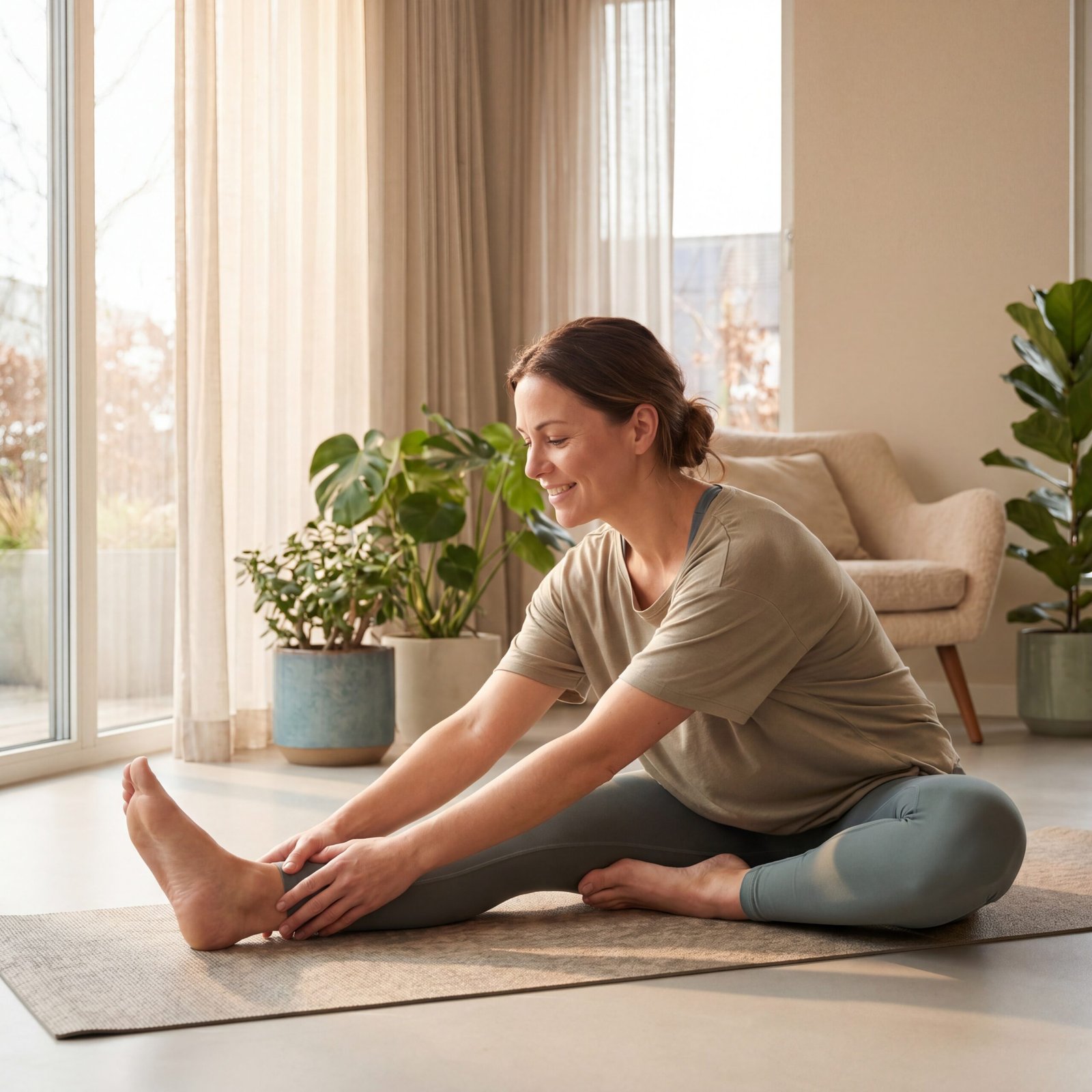
The most common problem areas, especially for people who sit a lot, include the hamstrings (back of the thighs), hip flexors (front of the hips), glutes and lower back, chest and shoulders (which round forward from desk work), and the neck. Gentle, regular stretching of these areas can relieve a huge amount of the everyday stiffness and discomfort people experience. If you’re short on time, prioritize these. Easing tension in your hips, hamstrings, back, and shoulders alone can transform how your whole body feels day to day.
5. Be Consistent — A Little Often Beats a Lot Rarely
This is the real secret to improving flexibility: consistency matters far more than intensity or duration. A short stretching session done regularly — even just 10 minutes a few times a week — produces far better, more lasting results than an occasional marathon stretching session. Flexibility is built gradually through repeated, gentle effort over time.
Try to make stretching a regular habit rather than a sporadic afterthought. You might stretch for a few minutes each morning to loosen up, after workouts when you’re warm, or in the evening to unwind. Even small daily movement breaks to stretch during a long sitting day make a real difference. The key is regularity — your body responds to consistent signals over weeks and months. Stick with it, and the gradual improvement will genuinely surprise you.
6. Try Yoga or Mobility Work
If you want a structured, enjoyable way to improve your flexibility, activities like yoga, Pilates, or dedicated mobility routines are excellent. Yoga in particular is wonderful for flexibility because it gently and systematically stretches the whole body, builds strength and balance alongside flexibility, and incorporates breathing and relaxation that help your muscles release.
There are countless beginner-friendly options, including gentle and accessible routines suitable for stiff beginners and older adults. You don’t need to be able to touch your toes or contort into pretzel shapes to start — good practices meet you where you are and progress gradually. Beyond the physical flexibility benefits, these practices also reduce stress and improve body awareness. If solo stretching feels boring or aimless, a structured class or routine can provide guidance, motivation, and variety. Find an approach you enjoy and you’ll stick with it.
7. Keep Moving Throughout the Day
Flexibility isn’t only built during dedicated stretching sessions — it’s also protected by how you move during the rest of your day. Prolonged stillness, especially sitting, is what creates much of our stiffness in the first place. So one of the best things you can do is simply avoid staying in one position for too long.
Break up long periods of sitting by standing, walking, and gently moving every hour or so. Roll your shoulders, stretch your neck, stand up and reach overhead, or take a quick walk. These small, frequent movements prevent your muscles from tightening up and keep your joints lubricated and mobile. Think of it as feeding your body the movement it craves throughout the day, rather than sitting frozen for hours and then trying to undo it all at once. Movement is medicine for stiffness.
Be Patient and Kind With Your Progress
As you begin working on your flexibility, remember that meaningful change takes time — and that’s completely normal. You won’t go from stiff to supple in a few days, but with consistent gentle effort, you’ll likely notice real improvements within a few weeks: less stiffness, easier movement, and gradually increasing range of motion. The progress is steady and genuinely rewarding once it starts.
Be especially patient and compassionate with yourself if you’re currently very tight. Everyone starts somewhere, and comparing yourself to a flexible yoga instructor will only discourage you. Focus on your own gradual progress rather than any ideal. Some days you’ll feel looser than others, and that’s normal too. Celebrate the small wins — touching a little lower, moving a little easier — and trust the process. Your body is adaptable, and consistent kindness toward it pays off.
A Looser, More Comfortable Body Awaits
Flexibility may be the quiet, overlooked pillar of fitness, but its impact on how you feel every single day is enormous. A more flexible, mobile body moves with ease, suffers fewer aches and injuries, stands taller, and simply feels better to live in. And the path to get there is gentle, accessible, and free — no equipment or athleticism required.
The principles are simple: warm up first, stretch gently without pain, hold long enough, focus on your tightest areas, stay consistent, consider structured practices like yoga, and keep moving throughout your day. None of it demands heroic effort — just a little patient, regular attention to how your body moves.
So start today. Spend just a few minutes gently stretching the areas that feel tightest, breathe, and ease into it without forcing. Do it again tomorrow, and the day after. Within a few weeks, you may be pleasantly amazed at how much looser, more comfortable, and more capable your body feels. A supple, pain-free body isn’t reserved for the naturally bendy — it’s available to you, one gentle stretch at a time.
This article is for general educational purposes and isn’t a substitute for professional medical advice. If you have an injury, joint problem, or health condition, please consult a doctor or physical therapist before beginning a new stretching or flexibility program.