
 By
By It’s often called “the silent killer,” and for good reason. High blood pressure usually causes no symptoms at all — you can feel perfectly fine while it quietly damages your arteries, heart, brain, and kidneys over the years. By the time problems show up, real harm may already be done. That’s the bad news. The good news is genuinely encouraging: high blood pressure is one of the most manageable and even preventable health conditions there is, and lifestyle changes can have a powerful effect.
If you’ve been told your blood pressure is high or borderline, or you simply want to protect your heart for the long run, learning how to lower blood pressure naturally puts real power in your hands. Many people are able to meaningfully reduce their blood pressure — and their risk of heart disease and stroke — through everyday changes alone, often reducing or avoiding the need for medication.
Let’s explore exactly what works, in clear and practical terms.
First, Understand What Blood Pressure Is
A quick foundation helps everything make sense. Blood pressure is the force of your blood pushing against the walls of your arteries as your heart pumps it around your body. It’s given as two numbers — the higher one (systolic) measures the pressure when your heart beats, and the lower one (diastolic) measures the pressure between beats, when your heart rests.
When this pressure stays consistently too high, it strains your heart and gradually damages your blood vessels and organs, raising your risk of heart attack, stroke, kidney disease, and more. Because it typically has no symptoms, the only way to know your numbers is to measure them — which is why regular checks matter so much. The reassuring part is that blood pressure is highly responsive to lifestyle. The very habits that raise it can, when reversed, bring it back down. That’s the foundation of everything that follows.
1. Eat a Heart-Healthy Diet
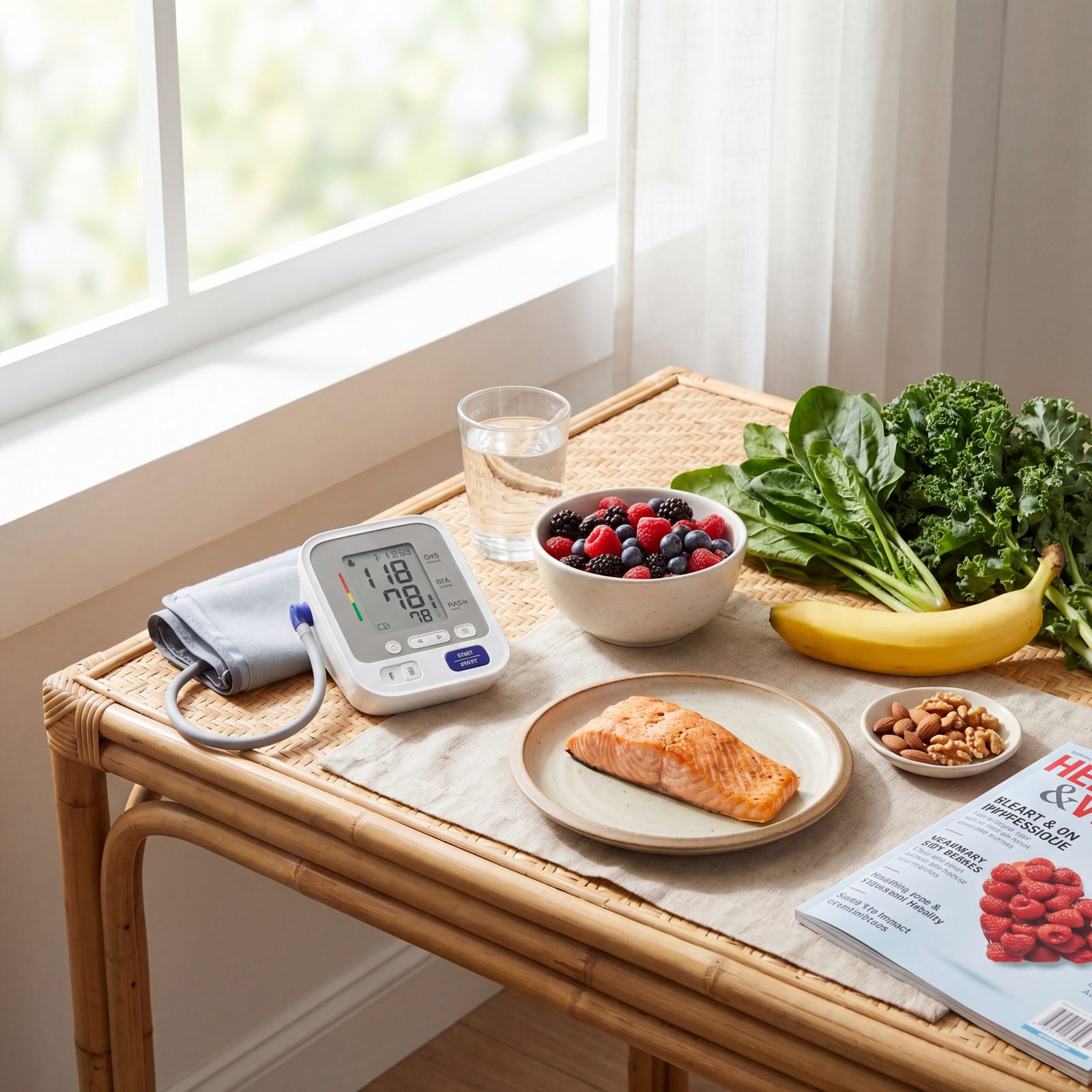
What you eat has one of the most powerful effects on your blood pressure. A diet rich in vegetables, fruits, whole grains, beans, nuts, seeds, fish, and healthy fats — and lower in processed foods, red meat, and added sugar — is consistently shown to lower blood pressure. Eating patterns specifically designed for blood pressure emphasize exactly these whole, minimally processed foods.
Particularly beneficial are foods rich in potassium (like bananas, leafy greens, beans, and potatoes), which helps balance sodium’s effects in the body. The overall pattern matters more than any single food — a plate full of colorful plants, whole grains, and lean proteins, with less processed and salty fare, is the foundation. You don’t need a perfect or restrictive diet; simply shifting your everyday eating in this direction can produce meaningful, measurable drops in blood pressure over time. Food really is powerful medicine here.
2. Cut Back on Salt (Sodium)
Sodium is one of the biggest dietary drivers of high blood pressure for many people. Eating too much salt causes your body to retain water, which increases the volume of blood and the pressure in your arteries. Reducing your sodium intake is one of the most effective dietary changes you can make to lower blood pressure.
Here’s a key insight: most of the salt in our diets doesn’t come from the salt shaker — it comes hidden in processed and packaged foods, restaurant meals, bread, sauces, and snacks. So the most powerful step is reducing processed and packaged foods and cooking more at home, where you control the salt. Season with herbs, spices, garlic, lemon, and other flavorings instead of relying on salt. Read labels and choose lower-sodium options. Cutting back gradually lets your taste buds adjust, and within a few weeks, heavily salted food often starts to taste too salty. Your arteries will thank you.
3. Lose Excess Weight (If Needed)
Carrying excess weight, particularly around the midsection, is closely linked to higher blood pressure, because it makes your heart work harder and affects how your body regulates pressure. The encouraging news is that the relationship works in reverse too — losing even a modest amount of excess weight can produce a noticeable drop in blood pressure.
You don’t need a dramatic transformation to benefit; even losing a small percentage of body weight can meaningfully improve your numbers. And the best part is that the very habits in this guide — eating well, moving more, sleeping enough, and managing stress — naturally support healthy weight loss without extreme dieting. Focus on building these sustainable habits, and a healthier weight, along with healthier blood pressure, tends to follow. Small, steady progress here pays real dividends for your heart.
4. Get Moving With Regular Exercise
Physical activity is one of the most effective natural ways to lower blood pressure. Regular exercise strengthens your heart, allowing it to pump blood more efficiently with less effort, which reduces the pressure in your arteries. The effects can be substantial — regular activity can lower blood pressure comparably to some interventions, and the benefits build with consistency.
You don’t need intense workouts. Regular moderate aerobic activity — brisk walking, cycling, swimming, or dancing — most days of the week is highly effective, with general guidance suggesting around 150 minutes a week. Adding some strength training offers further benefits. The key is consistency: regular movement keeps your blood pressure lower over time, while stopping causes it to creep back up. Find activity you enjoy so you’ll stick with it, and your heart and arteries will reward you with healthier numbers and a lower risk of disease.
5. Limit Alcohol
Alcohol’s relationship with blood pressure is clear: drinking too much raises it, sometimes significantly. Heavy and regular drinking is a well-established contributor to high blood pressure, and cutting back can produce a meaningful reduction for those who drink excessively.
If you drink, keeping it moderate and infrequent is important for your blood pressure and overall heart health. If you don’t drink, there’s no blood-pressure reason to start. Being honest with yourself about your intake and reducing it where you can is a simple but genuinely effective step. For some people who drink heavily, cutting back is one of the single most impactful changes they can make for their numbers. Your heart benefits directly from every reduction.
6. Quit Smoking
While smoking’s link to blood pressure is somewhat complex, the broader picture is crystal clear: smoking severely damages your blood vessels and dramatically raises your risk of heart disease, stroke, and the very complications that high blood pressure also causes. Each cigarette temporarily raises blood pressure, and the long-term damage to your arteries compounds the harm enormously.
If you smoke, quitting is one of the most powerful things you can do for your cardiovascular health — and it’s never too late, as your body begins to repair almost immediately. Quitting protects your blood vessels, lowers your overall heart-disease and stroke risk, and works hand in hand with all your other efforts to protect your heart. Support from your doctor or proven cessation programs dramatically improves your chances of success. This single change can transform your long-term health trajectory.
7. Manage Stress
Chronic stress contributes to high blood pressure, both directly through persistently elevated stress hormones and indirectly by driving unhealthy coping habits like poor eating, drinking, and inactivity. While occasional stress is normal, ongoing unmanaged stress quietly works against your heart over time.
Building regular stress-management practices into your life genuinely helps. Physical activity, time in nature, deep breathing, meditation, hobbies you enjoy, adequate rest, and strong social connections all help calm your nervous system and discharge stress before it accumulates. Even simple daily habits — a few minutes of slow breathing, a relaxing walk, or unhurried time with loved ones — make a difference. Treating your stress levels as a genuine part of your heart-health strategy, rather than an afterthought, supports healthier blood pressure and a healthier life overall.
8. Prioritize Quality Sleep
Sleep and blood pressure are closely connected. Poor sleep and certain sleep disorders are linked to higher blood pressure, partly because your blood pressure naturally dips during healthy sleep, and disrupted sleep interferes with this restorative process. Chronically poor sleep keeps your cardiovascular system from getting the rest it needs.
Aim for 7 to 9 hours of quality sleep, keep a consistent schedule, and protect a calming, screen-free wind-down routine. Importantly, if you snore heavily, gasp during sleep, or feel exhausted despite enough hours in bed, talk to a doctor — sleep apnea is a common and treatable condition that’s strongly linked to high blood pressure, and addressing it can significantly improve your numbers. Protecting your sleep is an often-overlooked but genuinely powerful part of managing blood pressure naturally.
9. Watch Your Caffeine (and Know Your Body)
Caffeine’s effect on blood pressure varies from person to person. For some people, especially those who don’t consume it regularly, caffeine can cause a short-term spike in blood pressure. Others develop a tolerance and see little effect. The key is to understand how your own body responds.
If you have high blood pressure, it’s worth being mindful of your caffeine intake and noticing whether it seems to affect you. You don’t necessarily need to eliminate coffee, but moderating it — and avoiding excessive amounts — is sensible, particularly if you’re sensitive. As with much of health, this is about tuning in to your individual body rather than following a one-size-fits-all rule. If you’re unsure, you can even check your blood pressure before and after caffeine to see how you personally respond, and discuss it with your doctor.
10. Monitor Your Numbers and Work With Your Doctor
Because high blood pressure is silent, monitoring is essential — you simply can’t manage what you don’t measure. Knowing your numbers lets you see whether your efforts are working and catch problems early. Many people benefit from checking their blood pressure regularly, including at home with a simple monitor, which can give a fuller picture than occasional readings at the doctor.
Crucially, while lifestyle changes are powerful, this is one area where partnering with your doctor truly matters. They can help you understand your numbers, track your progress, and advise whether lifestyle changes alone are enough or whether medication is also needed for your safety. Never stop or avoid prescribed medication on your own based on general advice — instead, use these natural strategies alongside professional guidance. The combination of healthy lifestyle and good medical care is the safest, most effective path to protecting your heart.
Small Changes, Powerful Results
The most empowering truth about high blood pressure is how responsive it is to the way you live. Unlike many health conditions, this one often improves dramatically through everyday habits — eating well, cutting salt, moving regularly, maintaining a healthy weight, limiting alcohol, quitting smoking, managing stress, sleeping well, and staying aware of your numbers. Each change helps, and together they can be genuinely transformative.
Notice, too, how these same habits protect far more than just your blood pressure — they guard your heart, brain, kidneys, and overall health, and add healthy years to your life. Lowering your blood pressure naturally isn’t a separate project; it’s simply living in a heart-healthy way.
You don’t have to overhaul everything at once. Pick one change that feels most doable right now — perhaps cutting back on processed salty foods, adding a daily walk, or booking that overdue check-up — and start there. Let it become a habit, then add another. Combined with regular monitoring and your doctor’s guidance, these small, consistent steps can quiet the “silent killer” and protect your heart for years to come. The power to change your numbers is, to a remarkable degree, in your own hands — and you can start using it today.
This article is for general educational purposes and isn’t a substitute for professional medical advice, diagnosis, or treatment. High blood pressure is a serious condition — please work with a qualified healthcare professional to monitor and manage it, and never start or stop any medication without medical guidance.