

 By
By Protein is having a moment. It’s stamped on cereal boxes, blended into coffee, baked into snack bars, and shouted about by every fitness influencer on the internet. With all that noise, you’d be forgiven for feeling completely confused. Is more always better? Are you getting enough? Too much? Do you need those expensive powders?
If you’ve ever wondered “how much protein do I need, really?” — you’re asking exactly the right question, and the honest answer is refreshingly less complicated than the hype suggests. Protein genuinely matters enormously for your health, but the truth sits in a sensible middle ground between the people who ignore it entirely and the people who treat every meal like a bodybuilding contest.
Let’s cut through the marketing and give you a clear, practical understanding you can actually use.
Why Protein Matters So Much
Before the “how much,” let’s appreciate the “why,” because it reframes protein from a fitness fad into a genuine health essential. Protein is one of the three main macronutrients, alongside carbohydrates and fats, but it plays a uniquely structural role in your body.
Think of protein as the raw building material for almost everything. Your muscles, skin, hair, nails, bones, and organs are built and repaired using it. The enzymes that drive your digestion and the antibodies that power your immune system are made of it. Many hormones depend on it. When you eat protein, your body breaks it down into smaller units called amino acids and reassembles them into whatever it needs to build and maintain you.
Beyond structure, protein is the most satisfying of the macronutrients — it keeps you feeling full longer, which helps with appetite control and weight management. It also requires more energy to digest than carbs or fat, giving it a small metabolic edge. In short, protein isn’t just for gym-goers. It’s foundational for everyone.
So, How Much Do You Actually Need?
Here’s the part you came for. The widely cited baseline recommendation to prevent deficiency is about 0.8 grams of protein per kilogram of body weight per day. For someone weighing 70 kilograms (about 154 pounds), that’s roughly 56 grams a day.
But — and this is important — that figure represents the minimum to avoid deficiency, not the amount for optimal health, energy, and body composition. A growing body of evidence suggests that many people, especially as they age or stay active, benefit from somewhat more. A common practical range for healthy, active adults falls around 1.2 to 1.6 grams per kilogram of body weight.
To make this concrete, that 70-kilogram person might aim for somewhere in the range of roughly 85 to 110 grams per day if they’re active. A simpler mental shortcut many people like: aim for a palm-sized portion of protein-rich food at each main meal. You don’t need to weigh and track everything — you just need a reasonable target and consistency.
Your Needs Change With Your Life Stage and Goals
Protein isn’t one-size-fits-all. Several factors nudge your ideal intake up or down, and knowing where you fall helps you personalize the general guidance.
If you’re active or exercising, especially with strength training, your muscles need extra protein to repair and grow, so aim toward the higher end of the range. If you’re trying to lose weight, slightly higher protein helps preserve muscle while you shed fat and keeps you feeling full, making the whole process easier. If you’re older, this is crucial: as we age, our bodies become less efficient at using protein, and muscle loss accelerates. Older adults often need more protein, not less, to protect their strength, mobility, and independence — yet many eat far too little.
On the other hand, if you’re largely sedentary, the lower end of the range is perfectly fine. The point is to match your intake to your life rather than chasing extreme numbers you don’t need.
The Power of Spreading It Out
Here’s a tip that surprises many people and matters more than they expect: when you eat your protein is nearly as important as how much. Many of us eat very little protein at breakfast, a modest amount at lunch, and then a huge serving at dinner. But your body can only use so much protein at once for muscle building and repair.
A smarter approach is to spread your protein fairly evenly across your meals — including a solid serving at breakfast. This gives your body a steady supply of building blocks throughout the day, supports muscle maintenance more effectively, and keeps you fuller and more stable in energy. So instead of a tiny breakfast and a massive dinner, aim to include a good protein source at each meal. It’s a small shift with a real payoff.
The Best Protein Sources (Animal and Plant)
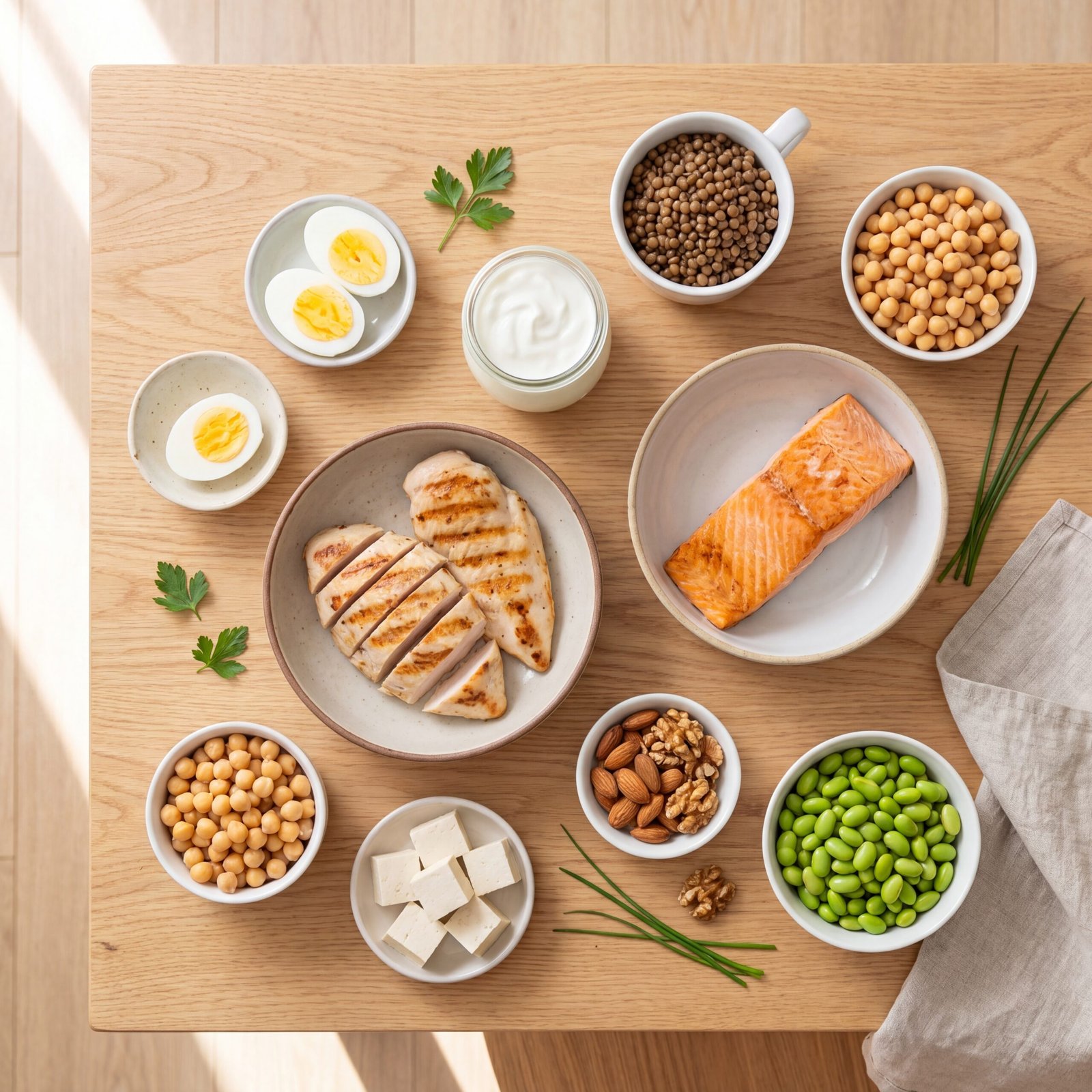
Protein comes from a wide range of foods, and variety is your friend. Animal sources are “complete” proteins, meaning they contain all the essential amino acids your body can’t make on its own. These include eggs, poultry, fish, lean meats, and dairy like Greek yogurt, milk, and cheese. Fish offers the bonus of healthy omega-3 fats; Greek yogurt and eggs are convenient, affordable staples.
Plant sources are equally valuable and bring fiber and other nutrients along for the ride. Beans, lentils, chickpeas, tofu, tempeh, edamame, nuts, seeds, and whole grains all contribute meaningful protein. While most individual plant foods are slightly lower in one or more amino acids, eating a variety of them across the day easily covers all your needs. Combinations like beans with rice are classic, naturally complete pairings.
You don’t have to choose one camp. A mix of both — or a well-planned plant-based approach — works beautifully. The key is regular, varied, quality sources.
Do You Need Protein Powder?
This is one of the most common questions, and the answer is reassuring: for most people, no, you don’t need it. Protein powder is simply a convenient, concentrated source — not a magic ingredient. You can absolutely meet your protein needs through whole foods alone, and whole foods bring extra nutrients and fiber that powders lack.
That said, powders can be genuinely useful in certain situations: if you’re very active and struggle to eat enough, if you’re short on time, if you have a higher requirement that’s hard to hit with food alone, or if you want a quick post-workout option. They’re a helpful tool, not a requirement. If you enjoy them and they help you reach your target, great — just treat them as a supplement to a food-first diet, not a replacement for it.
Can You Eat Too Much Protein?
With all the “more protein!” messaging, it’s fair to wonder about overdoing it. For healthy people, moderately higher protein intakes are generally considered safe, and the fears of protein “harming healthy kidneys” or “damaging bones” have largely not held up in research on healthy individuals.
However, more isn’t infinitely better. Beyond what your body can use, extra protein is simply used for energy or stored, offering no special bonus — and a diet obsessively centered on protein can crowd out the vegetables, fruits, whole grains, and healthy fats your body also needs. There’s an important exception: people with existing kidney disease or certain medical conditions may need to limit protein and should follow their doctor’s guidance. For everyone else, the goal is adequate and consistent, not maximal. Balance beats extremes.
Signs You Might Not Be Getting Enough
How do you know if you’re falling short? While only a professional can properly assess this, some common signs can hint at inadequate protein over time. These can include feeling unusually hungry or unsatisfied after meals, frequent cravings, difficulty maintaining muscle or noticing weakness, slow recovery, brittle hair and nails, or getting sick more often.
If several of these resonate and you suspect your diet is light on protein — perhaps you skip it at breakfast, eat few protein-rich foods, or have recently cut back on entire food groups — it’s worth taking an honest look at your meals. Often the fix is simple: add a protein source to a meal where you currently have none.
Making It Practical: A Simple Day
Let’s tie it together with what an easy, protein-aware day might look like, without any obsessive tracking. Breakfast could be Greek yogurt with nuts and berries, or eggs with whole-grain toast. Lunch might be a hearty salad or grain bowl with chicken, fish, beans, or tofu. A snack could be a handful of nuts, some edamame, or cottage cheese. Dinner could feature fish, lean meat, or a lentil dish alongside vegetables and a whole grain.
Notice there’s a protein source at every meal and snack, spread across the day. No powders required, no calculator needed — just a steady, varied supply. That simple framework will meet the needs of the vast majority of healthy people comfortably.
The Bottom Line
So, how much protein do you need? For most healthy, moderately active adults, aiming for roughly 1.2 to 1.6 grams per kilogram of body weight — spread across your meals, from a variety of quality sources — is a sensible, well-supported target. Older adults and very active people often benefit from the higher end; sedentary individuals can sit comfortably lower.
The real takeaway is to relax about the hype while taking protein genuinely seriously. You don’t need extreme amounts, expensive powders, or complicated tracking. You need a decent serving at each meal, a good mix of animal and plant sources, and consistency over time.
Get that right, and protein quietly does its job — keeping you strong, satisfied, and well-built from the inside out — for years and decades to come. Start by simply adding a solid protein source to your next breakfast. It’s one of the easiest, highest-impact upgrades you can make to your everyday nutrition.
This article is for general educational purposes and isn’t a substitute for personalized nutritional or medical advice. If you have kidney disease, another health condition, or specific dietary needs, please consult a qualified healthcare professional or registered dietitian before changing your protein intake.