

 By
By Imagine if a single hidden process was quietly behind your stiff joints, your stubborn belly fat, your afternoon brain fog, your skin breakouts, and even your low mood. You’d want to know about it, right? Well, scientists increasingly point to one common thread running through a huge range of modern health complaints: chronic inflammation.
The really empowering part is that what you put on your plate has a direct, measurable effect on it. You don’t need expensive supplements or a complicated regimen. You need to understand which foods calm your body down and which ones quietly stir it up — and then tip the balance in your favor. Let’s break it all down in plain language.
What Inflammation Actually Is (And Why It Turns Against You)
Inflammation isn’t the villain it’s often made out to be. In its proper role, it’s a hero. When you cut your finger or catch a cold, your immune system floods the area with protective cells, fluid, and chemicals to fight off invaders and repair damage. That’s acute inflammation — short-term, targeted, and absolutely essential. Without it, you couldn’t heal at all.
The problem begins when that alarm never fully shuts off. Chronic inflammation is a slow, low-grade fire that smolders in the background for months or years. Instead of healing you, it gradually wears your body down. Your immune system stays half-activated, attacking nothing in particular but irritating everything in general.
Over time, this persistent low fire has been linked to heart disease, type 2 diabetes, joint problems, digestive issues, and more. And one of the biggest things feeding that fire, day in and day out, is the modern diet. The flip side is genuinely exciting: change what you eat, and you can help put the fire out.
The Foods That Fuel the Fire
Let’s start with the troublemakers, because cutting back here often delivers the fastest results. These aren’t foods you must banish forever — life is for living — but they’re the ones to pull back on.
Sugary drinks and added sugars. Soda, sweetened coffees, energy drinks, and the hidden sugar in sauces, cereals, and “healthy” snacks are among the most inflammatory things in the average diet. Excess sugar triggers a cascade of inflammatory responses and feeds the kind of belly fat that itself produces inflammatory chemicals.
Refined carbohydrates. White bread, white rice, pastries, and many packaged snacks digest almost as fast as pure sugar, spiking blood sugar and adding fuel to the fire.
Processed and cured meats. Hot dogs, bacon, sausages, and deli meats are repeatedly linked to higher inflammation markers, partly due to their additives and the way they’re prepared.
Certain industrial oils and fried foods. Foods deep-fried in heavily processed oils, and the trans fats still lurking in some packaged baked goods, are strongly pro-inflammatory.
Too much alcohol. A little may be fine for many people, but heavy drinking irritates the gut lining and ramps up inflammation throughout the body.
Notice the pattern? The biggest culprits are almost all heavily processed, far from their natural state. That single insight will guide nearly every good food choice you make.
The Foods That Put the Fire Out
Now for the fun part — the foods that actively calm inflammation. The beautiful thing is they’re colorful, delicious, and satisfying. This is an eating style built on abundance, not deprivation.
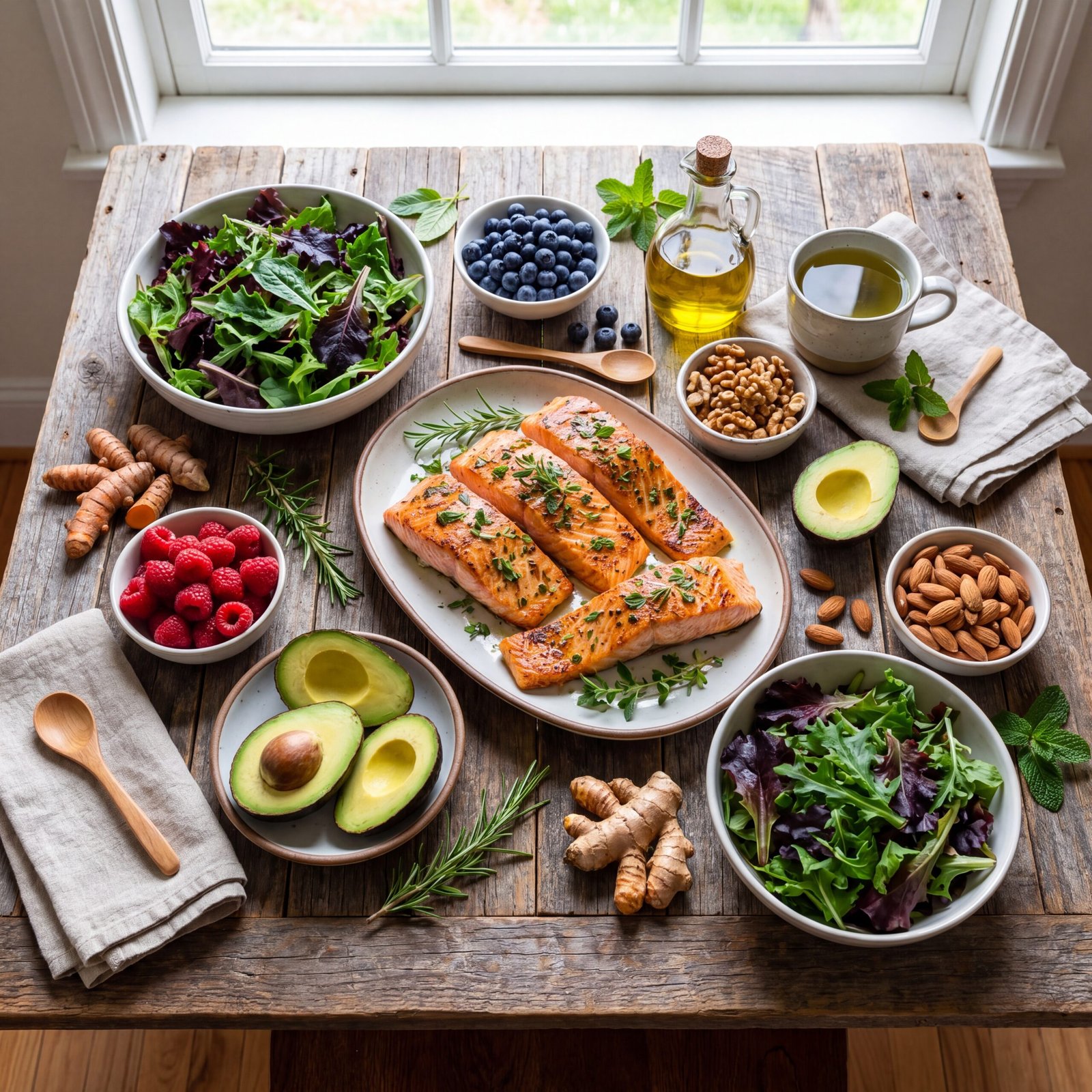
Fatty fish. Salmon, sardines, mackerel, and trout are loaded with omega-3 fatty acids, among the most powerful natural anti-inflammatory compounds we know of. Aim for two servings a week and you give your body serious firefighting tools.
Leafy greens and colorful vegetables. Spinach, kale, broccoli, peppers, and the like are packed with antioxidants that neutralize the unstable molecules driving inflammation. A simple rule: the more colors on your plate, the broader the protection.
Berries. Blueberries, strawberries, and raspberries are bursting with compounds called anthocyanins that have been shown to lower inflammatory markers. They’re nature’s candy with a built-in health bonus.
Extra virgin olive oil. A staple of the famously heart-healthy Mediterranean diet, good olive oil contains a compound with effects gently similar to anti-inflammatory medication. Use it as your everyday oil.
Nuts and seeds. Walnuts, almonds, flaxseeds, and chia deliver healthy fats and fiber that support a calmer internal environment. A small handful is a perfect snack.
Herbs and spices. Turmeric (especially paired with black pepper, which boosts its absorption), ginger, garlic, and cinnamon are tiny powerhouses. They make food taste incredible and fight inflammation at the same time.
Green tea. Rich in protective compounds, it’s a soothing swap for that third coffee or sugary drink.
Don’t Forget Your Gut
Here’s something many people miss: a huge portion of your immune system lives in your gut, and the trillions of bacteria there have a massive say in how inflamed your body is. A diet rich in fiber and fermented foods feeds the good bacteria, which in turn helps keep inflammation in check.
Fiber from vegetables, fruits, beans, and whole grains acts as food for these beneficial microbes. Fermented foods like plain yogurt, kefir, sauerkraut, kimchi, and miso introduce helpful bacteria directly. Tending your gut garden is one of the most underrated anti-inflammatory moves you can make — and it often improves digestion and mood as a bonus.
A Simple Day on an Anti-Inflammatory Plate
Theory is nice, but let’s make it real. Here’s what a genuinely easy, unfussy day could look like — no exotic ingredients required.
Breakfast: Plain Greek yogurt topped with a handful of mixed berries, a sprinkle of walnuts, and a dash of cinnamon. Or oatmeal with flaxseed and blueberries.
Lunch: A big colorful salad with leafy greens, peppers, cherry tomatoes, chickpeas or grilled salmon, and a drizzle of extra virgin olive oil with lemon.
Snack: An apple with a small handful of almonds, or some carrot sticks with hummus.
Dinner: Baked salmon or lentils, a generous side of roasted broccoli and sweet potato seasoned with turmeric and garlic, and a side of leafy greens.
Drinks throughout the day: Water, green tea, and maybe one coffee in the morning.
Notice this isn’t a “diet” in the suffering sense. It’s just real, satisfying food. You won’t be hungry, and you won’t feel deprived. That’s exactly why this approach tends to stick when restrictive diets fail.
How Fast Will You Feel a Difference?
People often want a timeline, so here’s an honest one. Some effects show up surprisingly fast. Many people report steadier energy and less bloating within the first one to two weeks, simply from cutting sugar spikes and feeding their gut better.
Deeper changes — less joint stiffness, clearer skin, more stable mood, better sleep — tend to build over four to eight weeks of consistency. And the protective benefits for your heart and long-term health accumulate quietly over months and years, even when you can’t feel them day to day.
The key word is consistency, not perfection. You don’t have to eat flawlessly. You just have to shift the overall balance of your plate toward the fire-fighters and away from the fire-feeders, most of the time.
The 80/20 Rule: Why Perfection Isn’t the Goal
This deserves its own moment, because it’s the difference between a lifestyle you can keep and one you’ll quit by next month. Aim to eat anti-inflammatory foods about 80 percent of the time, and don’t agonize over the other 20 percent. Birthday cake at a party? Enjoy it. Pizza with friends on Friday? Have it.
When your everyday foundation is solid, occasional treats barely register against the big picture. It’s what you do most days that shapes your health — not the slice of cake you had once. Letting go of all-or-nothing thinking is what turns this from a short-lived experiment into a way of living.
Small Swaps That Make a Big Difference
If overhauling everything feels overwhelming, don’t. Just start swapping. Trade soda for sparkling water with lemon. Swap white rice for brown rice or quinoa a few times a week. Replace your cooking oil with extra virgin olive oil. Reach for berries instead of candy when you want something sweet. Add a handful of spinach to a dish you already make.
Each swap is tiny on its own. But stack a few of them together, repeat them daily, and they quietly add up to a profoundly different internal environment. That’s the magic of small, sustainable changes — they don’t feel dramatic, but they’re the ones that actually last.
Your Takeaway
Chronic inflammation may be invisible, but its effects on how you feel every single day are very real. The remarkable news is that you have a powerful, delicious tool to influence it, and it’s sitting right there on your plate three times a day.
You don’t need to be perfect. You don’t need to spend a fortune. You just need to nudge your everyday eating toward whole, colorful, minimally processed foods — fatty fish, leafy greens, berries, olive oil, nuts, and gut-friendly favorites — while easing off sugar, refined carbs, and heavily processed fare.
Start with one meal today. Add berries to your breakfast tomorrow. Make that one swap this week. Your joints, your gut, your energy, your skin, and your future self will quietly thank you for it — one plate at a time.
This article is for general educational purposes and isn’t a substitute for personalized medical or nutritional advice. If you have a health condition or take medication, check with a qualified professional before making major dietary changes.